
Leaving too many leaves on your lawn for too long can create problems for your grass. While a few scattered leaves aren’t a concern, letting them pile up and sit for extended periods can affect the health of your lawn.
In Northeast Ohio, leaf cleanup isn’t a one-and-done fall chore. Different tree varieties drop their leaves at different times, and we typically see the heaviest leaf drop happen in stages from late October into November.
In this article, we’ll cover:
First, let’s look at why letting leaves pile up can cause problems for your grass.
Too many leaves can insulate the grass, creating conditions where weeds and pests can thrive, and bare spots can develop.
When leaves sit on the lawn for too long, we tend to see a few problems develop:
You want to stay ahead of heavy coverage so leaves don’t sit on your grass for extended periods of time.
In Northeast Ohio, clean up leaves as needed throughout late October and November rather than waiting for one final cleanup after every tree is bare.
In our experience, the first heavy leaf drop typically happens around Oct. 31, followed by another significant drop about two weeks later. These aren’t hard-and-fast dates, though. Weather and the types of trees around your home affect when leaves actually fall.
Use what’s happening on your lawn as your guide.
You may need to clean up leaves before, between, and after those heavier drops—especially in areas where they accumulate quickly. Some trees also hold onto their leaves much longer than others, so your cleanup schedule may look different from your neighbor’s.
Next, we’ll look at why tree variety makes such a difference.
Some trees drop their leaves later than others because leaf drop depends on multiple factors including the tree species, seasonal conditions, and the health of the tree.
| Factor | How it affects leaf drop |
|---|---|
| Tree species | Different species naturally shed their leaves on different schedules, so the trees in your yard won’t necessarily become bare at the same time. |
| Daylight and temperature | Shorter days and cooler temperatures help trigger the seasonal changes that lead deciduous trees into dormancy and leaf drop. |
| Weather conditions | Drought, heat and excessive moisture can stress trees and cause leaves to change color or fall earlier than usual. |
| Tree health | Disease, insects, root damage and other stressors can cause premature or abnormal leaf drop. |
| Marcescence | Some trees, including oaks and beeches, can hold onto dead leaves through fall and even winter instead of dropping them all at once. |
We see this play out differently from lawn to lawn. One property may be nearly finished with leaf drop while another still has trees holding plenty of leaves.
Some trees can even hold their leaves through the winter, so there isn’t always a point in November when every last leaf has fallen.
You also don’t need to wait for those late-dropping trees before taking care of leaves that are already covering your grass. Treat leaf cleanup as an ongoing part of fall lawn care, with the timing driven by what’s falling and accumulating in your yard.

No, you don’t have to remove every leaf from your lawn. A light layer of leaves can be mulched with your mower, while heavier accumulations should be raked or collected before they remain on the grass for too long.
If you decide to mulch, mow over relatively dry leaves until they’re shredded into small pieces that can settle between the grass blades. As the pieces decompose, they return organic matter and nutrients to the soil.
How you handle your leaves depends on their condition and how much has accumulated:
Check your lawn regularly as leaves continue to fall. You may be able to mulch a light layer one week and need to rake or collect heavier accumulation after the next major leaf drop.

Leaves on your lawn won’t prevent us from completing your fall treatment. We use the amount of leaf coverage to determine whether we can apply the product as-is or need to move leaves first.
Here’s how we handle leaves during an application:
And we don’t just move all the leaves into one big pile on another section of your lawn. That would leave another area covered while we work. Instead, we move and redistribute the leaves as we go so we can reach the grass throughout the property.
We don’t charge extra when we need to move leaves during your treatment. Some properties take more time than others, and we spend that extra time when necessary to make sure the application reaches your lawn.

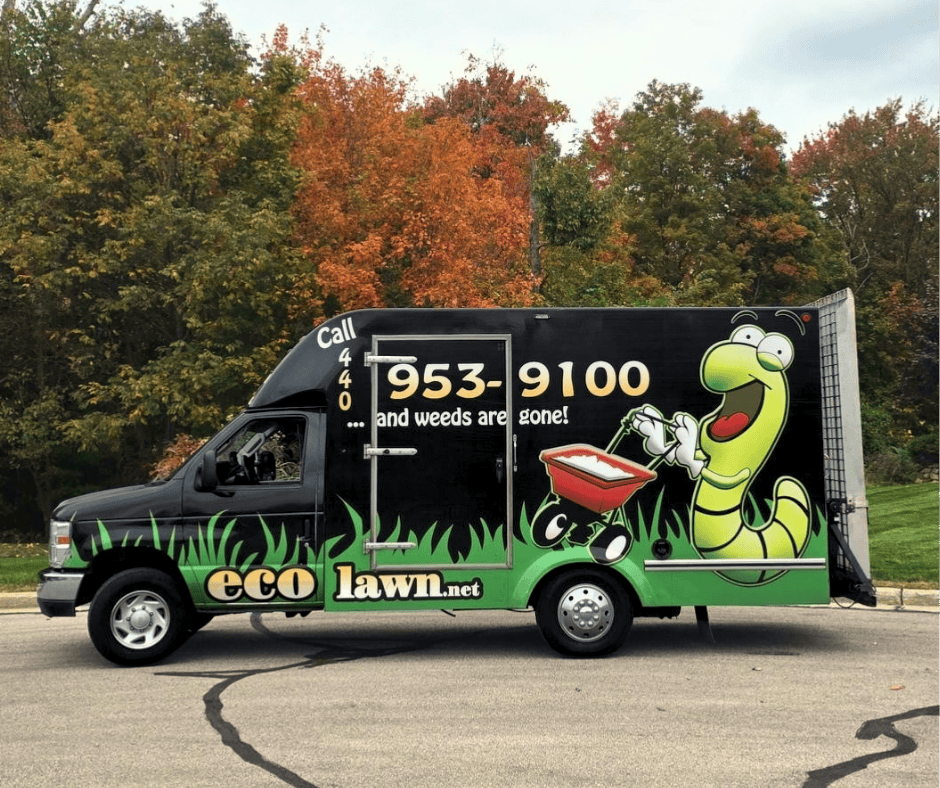
Ecolawn doesn’t provide leaf removal or cleanup services. When we move leaves during an application, we’re temporarily clearing the grass so your treatment can reach the lawn.
You’re still responsible for cleaning up the leaves on your property. As more leaves fall throughout the season, continue managing significant accumulation between treatments.

Seeing a lawn treatment happening in November might seem late, especially when your grass has stopped growing and leaves are still falling. But your lawn is still active below the surface.
Even after the grass stops growing above ground, the roots continue growing until the ground freezes. So there’s still time for your lawn to benefit from its final treatments of the season.
We aim to complete all treatments by Nov. 30, weather permitting.
Yes, you can leave a light scattering of leaves on your lawn, but avoid letting a heavy layer accumulate for an extended period. Significant leaf coverage can insulate the grass, provide shelter for insects and rodents, encourage weeds and contribute to thin or bare spots.
Avoid leaving a heavy layer of whole leaves on your lawn over winter. Some trees, including certain oaks, hold their leaves later into the season, so continue checking for significant accumulation even after your main fall cleanups are finished.
Leaves can benefit your lawn when you mulch a manageable amount into small pieces. As shredded leaves decompose, they return organic matter and nutrients to the soil. When whole leaves become too thick, wet or matted to mulch effectively, rake or collect the excess instead.
Watch for leaves forming a substantial layer over the grass rather than focusing on whether every individual leaf has been removed. Light, dry coverage may be suitable for mulching, while heavier or matted accumulation should be addressed before it sits on the lawn for too long.
Clean up leaves as needed throughout late October and November based on how quickly they accumulate. In our experience, Northeast Ohio typically sees a heavy leaf drop around Oct. 31 and another significant drop about two weeks later. Weather and the trees around your home affect the timing, and some trees continue dropping leaves later.
Yes. We can typically treat your lawn when leaves are present. With less than about 50% leaf coverage, granular treatments can filter through the leaves and reach the grass. With heavier coverage, our technicians move the leaves as needed before applying your treatment. We don’t provide leaf removal or cleanup services.